
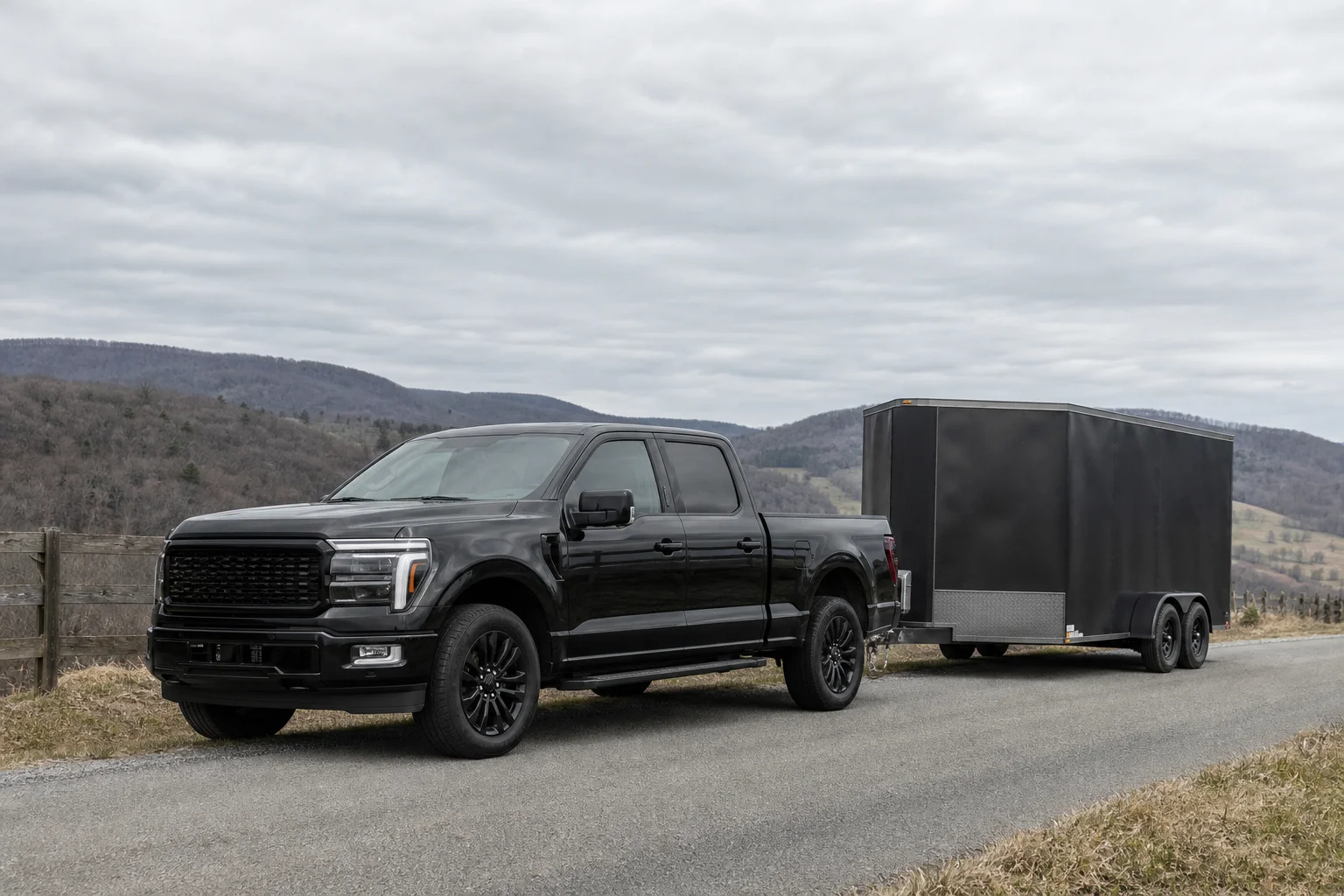
Used Trucks for Towing in Charles Town WV: How to Compare
Choosing a truck for towing is about more than finding the biggest engine or the highest number in an advertisement. If you’re comparing used trucks for towing in Charles Town WV, the right choice depends on your trailer’s loaded weight, the truck’s exact configuration, and how you plan to use it around Jefferson County and the Eastern Panhandle. This guide explains what to verify, which features matter, and how to compare candidates without relying on a headline towing figure alone.
Key takeaways
- Match the truck to your trailer’s actual loaded weight, including cargo, water, equipment, and passengers—not just its empty or advertised weight.
- Check the specific truck’s configuration and documentation; towing capacity can change with engine, cab, bed, drivetrain, axle ratio, and equipment.
- Compare payload and tongue weight as well as maximum tow rating. A truck can meet the tow rating and still be overloaded.
- Inspect the hitch, tires, brakes, cooling system, transmission, and maintenance history before buying a used tow vehicle.
- Take a realistic test drive and confirm the truck is equipped for your trailer before making a decision.
Start with the trailer and the way you’ll use it
Before comparing trucks, write down what you expect to tow. A small utility trailer, a camper, a boat, and a work trailer place different demands on a pickup—even when their listed weights look similar. If you already own a trailer, check its certification label and use its gross vehicle weight rating (GVWR) as a starting point. If you’re shopping for one, estimate its fully loaded weight rather than planning around the dry weight.
Add the weight of everything that will travel with you: passengers, tools, camping gear, fuel, and cargo in the truck bed. For a travel trailer, account for the weight pressing down on the hitch, known as tongue weight. For a fifth-wheel or gooseneck, the truck must handle the heavier pin or vertical load through the bed-mounted hitch.
Think about where and how often you’ll tow. A truck used for occasional trips with a light trailer may not need the same setup as one regularly hauling equipment or a loaded camper. Routes through the Eastern Panhandle can include hills, traffic, and changing road conditions, so a comfortable margin matters more than choosing a truck that barely meets a published maximum.
Compare towing capacity, payload, and configuration
Used truck towing capacity is specific to the vehicle’s configuration. Two pickups with the same model name can have different ratings because of differences in engine, cab and bed length, two- or four-wheel drive, axle ratio, transmission, and factory towing equipment. A maximum figure shown for a model line may describe a specially equipped version—not the particular truck you’re considering.
Look for the truck’s certification and tire labels, owner’s manual, and manufacturer towing information. When available, use the VIN and exact configuration to confirm the rating. If the documentation is missing or the configuration is unclear, don’t treat a seller’s estimate as a verified capacity.
Then check payload. Payload is the weight the truck can carry, including occupants, cargo, accessories, and the trailer’s tongue or pin weight. That load can use up capacity quickly: add passengers, a toolbox, bed cargo, and a trailer tongue, and a truck may reach its payload limit even though the trailer is below its maximum tow rating.
For each candidate, compare these figures side by side:
- Maximum trailer weight: The truck’s rating for the applicable configuration and towing setup.
- Payload: The available carrying capacity shown on the truck’s label, accounting for occupants and cargo.
- Gross vehicle weight rating (GVWR): The maximum permitted loaded weight of the truck itself.
- Gross combined weight rating (GCWR): The maximum combined weight of the loaded truck and trailer.
- Hitch rating: The rating of the receiver or bed-mounted hitch and its components.
The lowest applicable limit governs. A capable engine cannot make up for an overloaded payload, an underrated hitch, or a combination that exceeds its GCWR. If you’re comparing used pickup trucks in Charles Town WV, ask for the details that identify each truck’s actual towing setup—not just its model and engine.
Truck towing features to check before you buy
Useful truck towing features to check include a factory tow package, trailer brake controller, appropriate hitch receiver, wiring connector, and transmission or engine cooling equipment where specified for that configuration. Tow/haul mode can help manage shifting under load, while trailer sway control and integrated brake controls may add convenience and support. These features don’t increase capacity beyond the truck’s official ratings.
Inspect the hitch and wiring rather than assuming they’re ready to use. Look for damaged, bent, heavily corroded, or poorly installed components, and confirm that the connector matches your trailer. A receiver hitch’s presence alone doesn’t prove it has the rating or setup you need. For fifth-wheel or gooseneck towing, verify bed space, mounting hardware, axle and payload limits, and compatibility with the trailer.
Condition matters just as much as equipment. Check tire size, load rating, tread condition, and age; tires must be appropriate for the truck’s required load. Look for signs of uneven wear, fluid leaks, damaged suspension parts, or excessive rust around the frame and hitch area. Ask about brake, transmission, differential, and cooling-system maintenance, especially if the truck has been used to tow regularly.
A test drive should help you assess everyday comfort and basic operation, not serve as proof of maximum towing ability. Listen for unusual noises, check that the transmission shifts smoothly, and note how the brakes and steering feel. If you need a closer mechanical assessment, ask about a professional pre-purchase inspection for a used vehicle before you commit.
Make an apples-to-apples comparison
When several trucks look promising, compare them using the same checklist. Record the year, engine, cab, bed, drivetrain, axle information if available, tow package, verified ratings, mileage, service records, and condition. Also consider fuel use, parking, daily driving comfort, and whether you need a full-size or heavy-duty truck. More capacity can be useful, but a larger truck may be less convenient when most trips are unladen.
Use this simple sequence to narrow the list:
- Confirm the trailer’s loaded weight and hitch or pin weight.
- Identify the truck’s exact configuration and verify its ratings from reliable documentation.
- Check payload, GVWR, GCWR, and hitch limits—not only maximum trailer weight.
- Inspect towing equipment, tires, brakes, suspension, and maintenance history.
- Compare the truck’s condition and ownership costs against its price and your actual needs.
Be cautious if a truck has aftermarket modifications that are not documented, a missing hitch rating, warning lights, or a service history that leaves major questions unanswered. Modifications may affect handling, compatibility, or warranty coverage; they do not automatically raise the manufacturer’s towing limits. If a number cannot be verified, treat it as unknown until you can confirm it.
Once you have a shortlist, review the used vehicle inventory and compare the trucks that fit your requirements. If you’re also weighing the budget, explore available financing options after you’ve identified a truck that suits the job.
Frequently asked questions
How do I find the towing capacity of a used truck?
Use the truck’s exact configuration and manufacturer documentation to verify its towing capacity. Check the owner’s manual, certification information, and VIN-specific resources when available; don’t rely only on a general model-year maximum or an unverified listing.
Is towing capacity the same as payload?
No. Towing capacity refers to the trailer weight the truck is rated to pull under specified conditions, while payload is the weight the truck itself can carry. Passengers, cargo, accessories, and trailer tongue or pin weight all count toward payload.
Do I need a tow package to tow a trailer?
Not every trailer requires a factory tow package, but the truck must have the right equipment and verified ratings for that specific load. A tow package may include components such as wiring, cooling equipment, or a brake controller, so confirm what is installed and what your trailer requires.
Should I test-drive a used truck with my trailer?
Only if the truck, hitch, trailer, and driver are properly equipped and the test can be done safely and legally. A normal test drive can reveal how the truck operates, but it does not establish maximum towing capacity or replace checking ratings and condition.
The best used truck for towing is the one whose verified ratings, payload, equipment, and condition match your real trailer and routine—not simply the one with the biggest advertised number. Compare configurations carefully, ask for documentation, and leave a sensible capacity margin. That approach can help shoppers in Charles Town, Harpers Ferry, Martinsburg, Shepherdstown, and Inwood choose with more confidence before visiting the lot.