
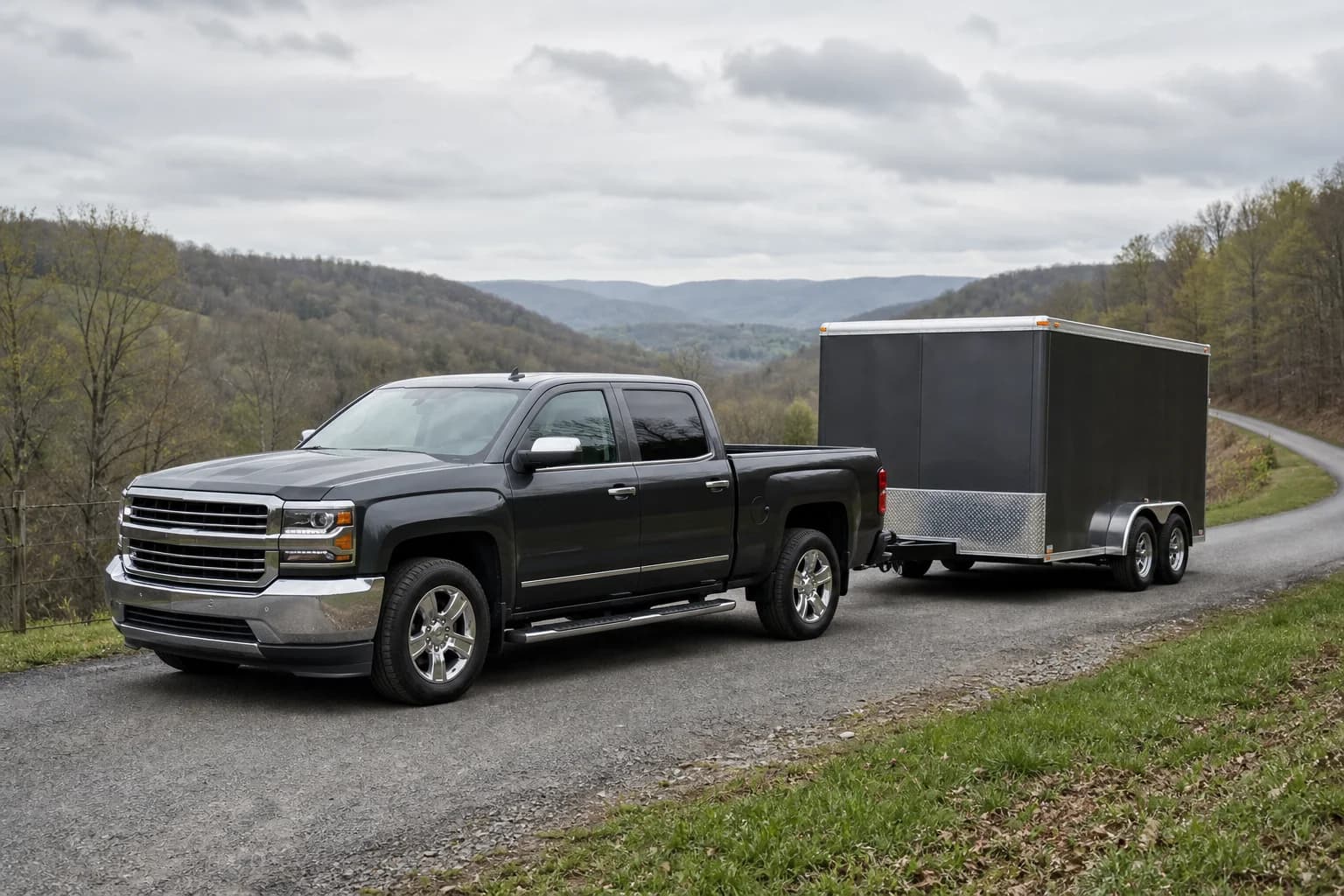
Used Trucks Charles Town WV: Compare Towing Capacity
Choosing a truck by its headline towing number can lead to an expensive mismatch: the truck may be rated to pull your trailer, yet run out of payload once passengers, cargo, and tongue weight are aboard. If you’re comparing used trucks Charles Town WV buyers can find locally, start with the specific truck’s equipment and the load you actually plan to tow—not just its model name. This guide explains how to compare ratings, check the door-jamb label and owner’s manual, and decide whether a half-ton or heavier-duty pickup better suits your work or weekend plans in Jefferson County.
Key takeaways
- There is no single towing capacity for a truck model. Engine, cab, bed, drivetrain, axle ratio, and factory towing equipment can change the rating.
- Compare the trailer’s loaded weight with the truck’s rating, then check payload and tongue weight separately.
- Use the specific truck’s certification label, owner’s manual, and manufacturer towing guide to verify limits; don’t rely on a generic online maximum.
- Include passengers, bed cargo, hitch equipment, and accessories when checking payload and axle limits.
- Choose a truck for your usual loaded trailer and driving conditions, with a sensible margin—not solely for the largest number on a listing.
Start with the trailer you will actually tow
Before comparing trucks, write down what you plan to pull. A small utility trailer used for yard projects is a different assignment from a camper, enclosed work trailer, or equipment trailer. The trailer’s empty weight is only a starting point; water, tools, building materials, recreational gear, and other cargo add weight quickly.
Find the trailer’s gross vehicle weight rating (GVWR), which is its maximum permitted loaded weight, and estimate the weight you expect to tow. If you can, use a scale to establish the real loaded weight. For a trailer you have not purchased yet, use a realistic estimate based on its specifications and intended cargo rather than assuming you will always travel light.
Next, identify the trailer’s tongue weight: the downward force it places on the hitch. Conventional bumper-pull trailers commonly place a portion of their loaded weight on the hitch, but the correct amount depends on the trailer and its setup. Follow the trailer and hitch manufacturers’ guidance. That tongue weight counts against the truck’s payload, even though the trailer is being towed rather than carried in the bed.
Compare the exact truck configuration, not the model name
Two used pickups with the same model badge can have different towing limits. Engine choice, two- or four-wheel drive, cab style, bed length, axle ratio, transmission, and factory tow package all matter. A maximum towing figure in an advertisement or brochure may apply only to a particular configuration and equipment combination.
When evaluating used pickup trucks Jefferson County WV shoppers are considering, ask for the VIN and verify the truck’s configuration against the manufacturer’s towing information for that model year. Check the owner’s manual for the applicable towing chart and requirements. Confirm whether the truck has the factory receiver, wiring, cooling components, brake controller, or other equipment required for the rating you intend to use.
Look for the certification label on the driver’s door or door jamb. It provides vehicle-specific information such as GVWR and front and rear gross axle weight ratings (GAWR). The label’s payload figure, when shown, is especially useful, but remember that added equipment and accessories can reduce the capacity available for people and cargo. If a label is missing or difficult to read, ask the seller or manufacturer how to verify the truck’s ratings rather than guessing.
For a practical comparison, review available trucks by specific vehicle and equipment, then verify each candidate’s ratings individually. A listing is a starting point, not proof that a particular truck can safely handle your trailer.
Check payload, hitch, and axle limits as carefully as towing capacity
Towing capacity and payload are different limits. Towing capacity concerns the trailer the truck can pull under specified conditions. Payload is the weight the truck can carry, including occupants, cargo, accessories, and the portion of trailer weight pressing down on the hitch. A truck can have a high advertised tow rating and still be a poor match if its payload is too low for your loaded setup.
Use this checklist before deciding:
- Truck payload: Start with the vehicle-specific payload information. Account for every passenger, items in the cab or bed, aftermarket equipment, and hitch hardware.
- Trailer tongue weight: Add the loaded trailer’s tongue weight to the truck’s carried load. Do not treat it as weight that disappears because the trailer has its own wheels.
- GVWR: The loaded truck—including passengers, cargo, and tongue weight—must stay within the truck’s gross vehicle weight rating.
- GAWR: Check front and rear axle limits. A load can exceed the rear axle rating even when the truck’s total weight appears to be within GVWR.
- Hitch and receiver: The receiver, ball mount, ball, and any weight-distributing equipment must be appropriate for the trailer and truck. The lowest-rated component can set the limit.
- Trailer brakes and wiring: Confirm the trailer’s braking requirements and whether the truck has compatible wiring and a brake controller when needed.
For example, imagine a family towing a camper with two adults, children, luggage, and a cooler in the pickup. The trailer might fall below the truck’s maximum tow rating, but the combined tongue weight and people could push payload or rear-axle capacity too close to its limit. That is why a towing comparison should include the whole loaded combination, not just the trailer’s advertised dry weight.
Choose a truck for local use and a realistic margin
How to choose a used truck for towing depends on how often you tow, what you carry, and where you drive. A truck that handles occasional light towing may not be the right choice for frequent trips with a heavy trailer, a full cab, or a loaded bed. Consider the complete routine: where the trailer is stored, how much cargo travels with you, and whether you need room for passengers or work equipment.
In and around Charles Town, Harpers Ferry, Martinsburg, Shepherdstown, and Inwood, your route may include hills, traffic, narrow roads, or changing weather. Those conditions do not change the truck’s published ratings, but they can make towing more demanding. A larger engine or heavier-duty configuration may offer a more suitable setup for regular heavy loads, while a lighter-duty pickup may be easier to live with if your trailer is modest and your other needs are different.
Do not shop at the absolute edge of a rating simply because the numbers technically line up. A reasonable margin gives you room for the real-world variation in cargo and passengers. It does not override any GVWR, GAWR, hitch, tire, or trailer limit; every applicable rating still has to be respected.
If you are comparing payment options as well as capability, review financing information alongside the vehicle’s equipment and ownership costs. A truck that fits the budget but cannot handle the intended load is not the right value.
Inspect the truck and towing equipment before you buy
A correct factory rating does not tell you the condition of an individual used truck. Inspect the receiver and frame area for damage, corrosion, poor repairs, or signs of heavy use. Check that the trailer wiring connector is present and secure, and ask whether the truck’s brake controller and towing features work. A test drive without a trailer can reveal some mechanical concerns, but it cannot prove that the truck-trailer combination is properly matched.
Review maintenance records where available, especially for a truck that has regularly towed. Pay attention to transmission behavior, cooling-system condition, tires, brakes, suspension, and any warning lights. These checks are not a substitute for a professional inspection, and a clean appearance alone does not establish towing readiness.
Before purchasing, have the specific truck inspected and confirm its ratings using reliable vehicle-specific documentation. If you are considering a vehicle outside the dealership, Renn Kirby Charles Town Auto explains its pre-purchase inspection option. Ask what the inspection covers and whether towing equipment and related concerns can be evaluated.
Frequently asked questions
How do I find the towing capacity of a used truck?
Find the rating for the truck’s exact model year, engine, drivetrain, cab, axle ratio, and towing equipment. Use the owner’s manual and manufacturer towing guide, and verify the vehicle’s configuration by VIN; a generic model maximum may not apply to that truck.
Is towing capacity the same as payload?
No. Towing capacity is the permitted trailer weight under specified conditions, while payload is what the truck carries. Passengers, bed cargo, accessories, hitch equipment, and trailer tongue weight all use payload, so check both limits.
Can a half-ton truck tow a camper?
Some half-ton pickups can tow some campers, but the answer depends on the specific truck and the camper’s loaded weight and tongue weight. Verify the truck’s tow rating, payload, GVWR, axle ratings, and hitch limits with the passengers and cargo you expect to carry.
Should I choose a truck with the highest towing number?
Not necessarily. Choose a truck that safely fits your usual loaded trailer and everyday needs, with room for realistic changes in cargo. The highest advertised rating may belong to a different configuration, and it does not guarantee adequate payload or a suitable hitch setup.
Comparing used truck towing capacity comes down to matching the loaded trailer to the exact truck, then checking payload, axle, and hitch limits as well as condition. For shoppers in Charles Town and across the Eastern Panhandle, taking time to verify those details can narrow the search to pickups that fit both the job and daily life. Bring your trailer details and a realistic passenger-and-cargo estimate when you compare used vehicles, and ask questions about the specific truck rather than relying on a headline rating.